Religion der Kreativität
2026
Kuration: Maria Pfrommer
Künstler: Clair Bötschi
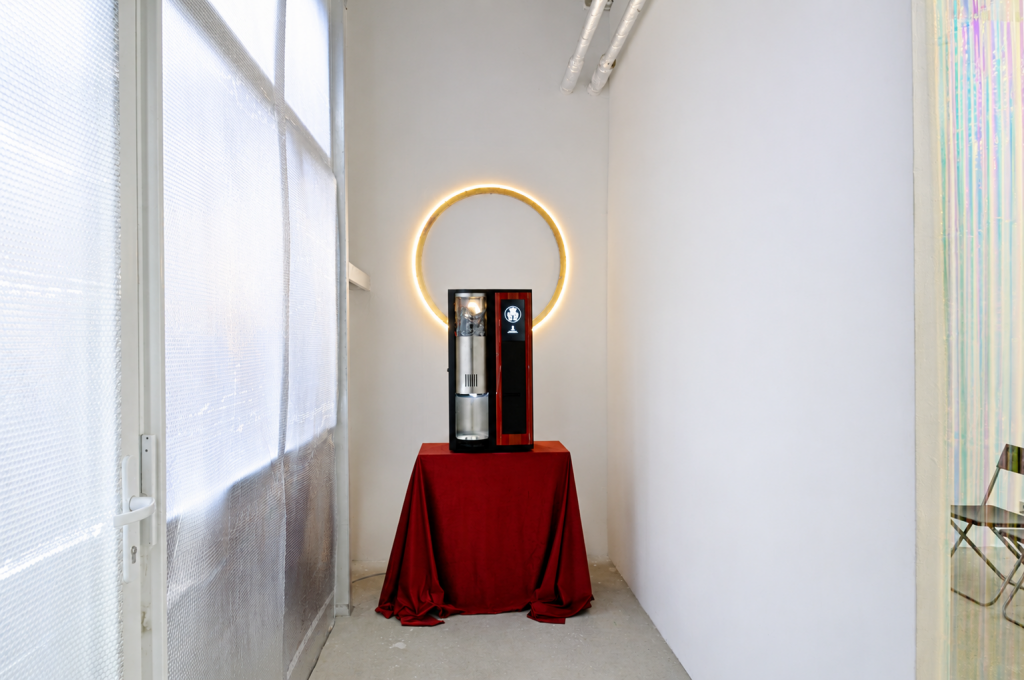
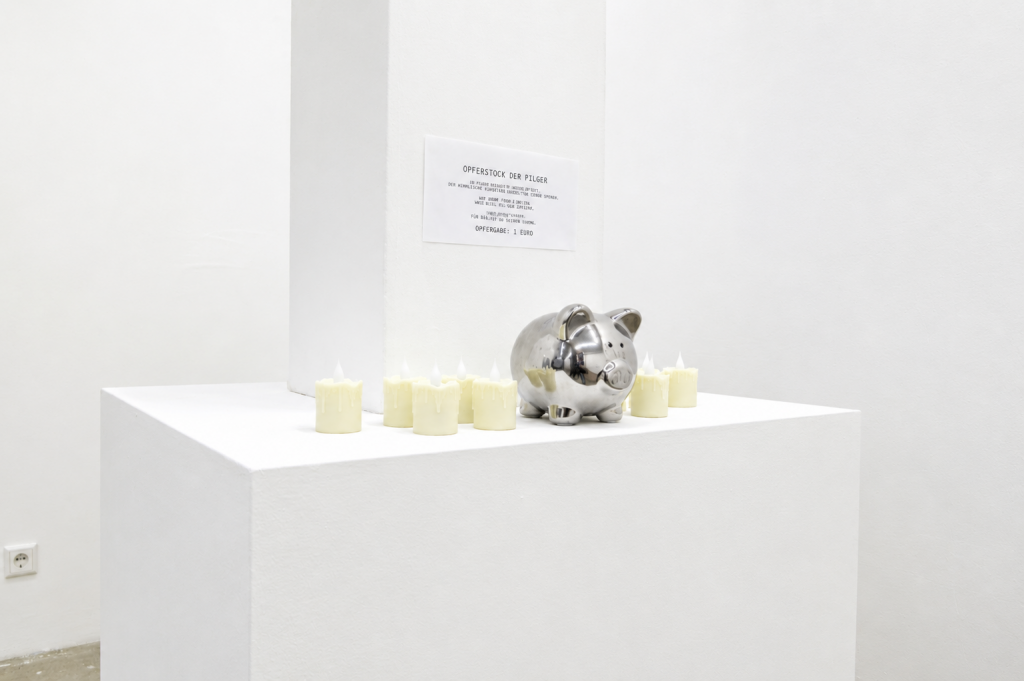
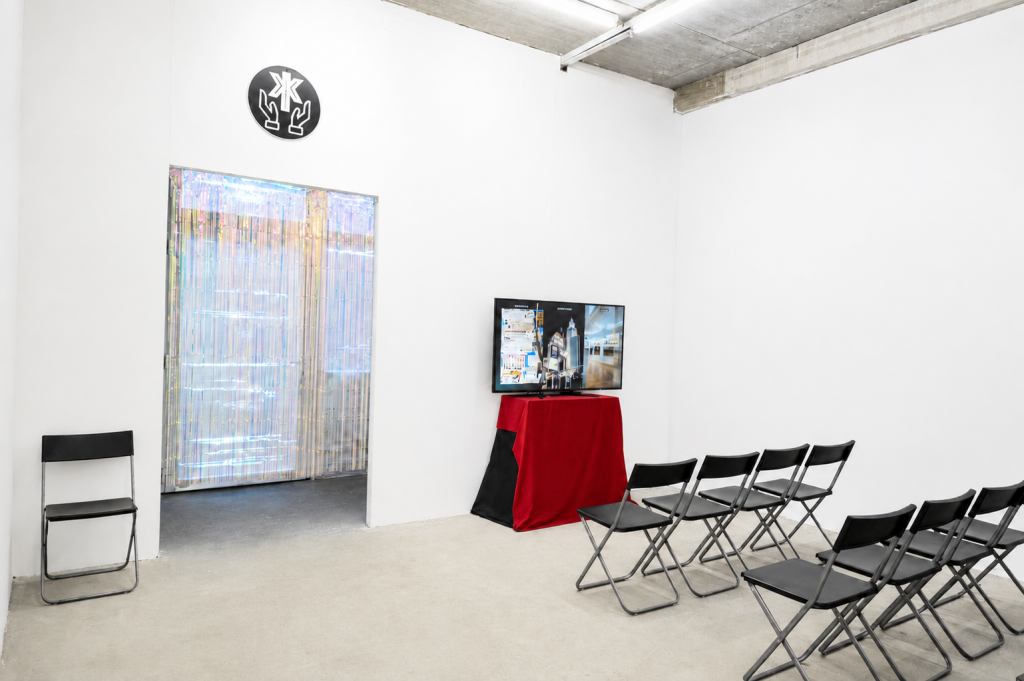
Religion der Kreativität ist eine performative Installation, die aus einer interaktiven Webseite mit Fan-Shop, einem mobilen Beichtstuhl und sieben Säulen der Kreativität entsteht. Ausgangspunkt ist die Frage, wie Kreativität heute als knappes Gut gehandelt und zugleich als Heilsversprechen gefeiert wird. Die Arbeit verbindet ökonomische und religiöse Symbolik: Ablassbriefe, Devotionalien und Dienstleistungen können erworben werden, während versteckte Zitate in den Produkten unterschiedliche gesellschaftliche Deutungen von Kreativität aufgreifen und gegeneinander ausspielen. So entsteht eine glatte, scheinbar perfekte Kreativ-Welt, die zugleich Konsumkritik, Parodie und Spiegel der Selbstvermarktungslogik ist. Zwischen Hoffnung und Ironie macht das Projekt sichtbar, wie Kreativität zur neuen Religion und zugleich zur ökonomischen Ressource unserer Zeit geworden ist.
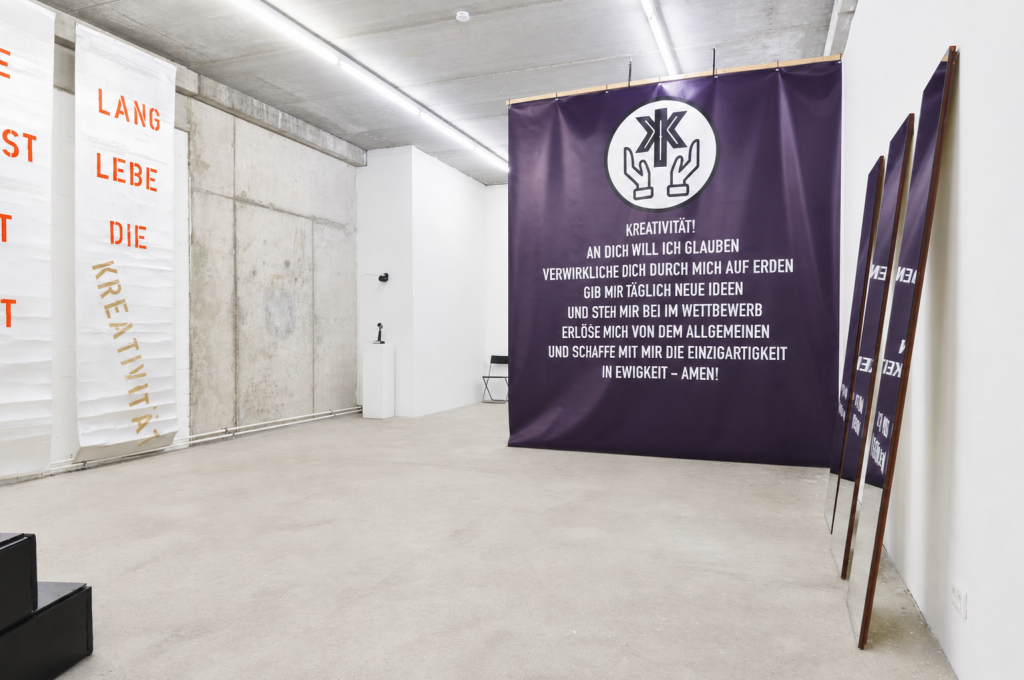
Die Religion der Kreativität verwandelt das Q18 im Quartier am Hafen in einen sakralen Raum der Kreativität. Es werden die sieben Säulen der Kreativität gezeigt, welche unter anderem durch Beichtstühle, Altare, Banner, Texte und Triptychons dargestellt werden. Highlight ist der Beichtautomat, bei dem die Besucher:innen die Beichte über ihre kreativen Tätigkeiten ablegen können. Bekennen sie sich zu ihren Sünden und zeigen einen Willen zur Besserung erhalten sie einen Ablassbrief.
Clair Bötschi (*1988, lebt in Stuttgart) arbeitet medienübergreifend an der Schnittstelle von Kunst, Wirtschaft und Kulturmanagement. Sein Schaffen umfasst künstlerische Projekte, Performances, Installationen und kulturwirtschaftliche Konzepte, die häufig gesellschaftliche und ökonomische Strukturen hinterfragen. Ein zentraler Fokus liegt auf der Untersuchung von Kreativität als kulturellem und ökonomischem Phänomen. Bötschi studierte „Wirtschaft neu denken“ an einer Kunsthochschule sowie Kulturmanagement an der TU Dresden. Seine Arbeiten wurden unter anderem im Kunstverein Wagenhalle Stuttgart, im Stadtmuseum Düsseldorf und im Europäischen Zentrum der Künste Hellerau gezeigt. Neben seiner künstlerischen Tätigkeit ist er als Autor, Kulturmanager und Kurator aktiv.
Die Ausstellung ist Teil der vierteiligen Ausstellungsreihe „Let’s talk about the art world“, die 2026 im Quartier am Hafen im Q18 organisiert wird.
Religion der Kreativität (Religion of Creativity) is a performative installation consisting of an interactive website with an online fan shop, a mobile confession booth, and the Seven Pillars of Creativity. The project begins with the question of how creativity has become both a scarce commodity and a celebrated promise of salvation. It combines economic and religious symbolism: indulgence certificates, devotional objects, and creative services can be purchased, while hidden quotations embedded within the products evoke and contrast different social understandings of creativity. The result is a polished, seemingly perfect world of creativity that functions simultaneously as consumer critique, parody, and a reflection of the logic of self-branding. Oscillating between hope and irony, the project reveals how creativity has become both the new religion and a key economic resource of our time.
Religion of Creativity transforms Q18 at Quartier am Hafen into a sacred space dedicated to creativity. The exhibition presents the Seven Pillars of Creativity through confession booths, altars, banners, texts, and triptychs. Its central feature is the Confession Machine, where visitors are invited to confess their creative activities. Those who acknowledge their creative sins and demonstrate a genuine willingness to improve receive an indulgence certificate.
Clair Bötschi (*1988, lives in Stuttgart) is an interdisciplinary artist working at the intersection of art, economics, and cultural management. His practice encompasses artistic projects, performances, installations, and cultural-economic concepts that frequently examine social and economic structures. A central focus of his work is the investigation of creativity as both a cultural and an economic phenomenon. Bötschi studied Rethinking Economics at an art academy and Cultural Management at the Technical University of Dresden. His work has been presented at Kunstverein Wagenhalle Stuttgart, the Düsseldorf City Museum, and the European Centre for the Arts Hellerau, among others. Alongside his artistic practice, he works as an author, cultural manager, and curator.
The exhibition is part of the four-part exhibition series Let’s Talk About the Art World, organized at Q18, Quartier am Hafen, throughout 2026.